


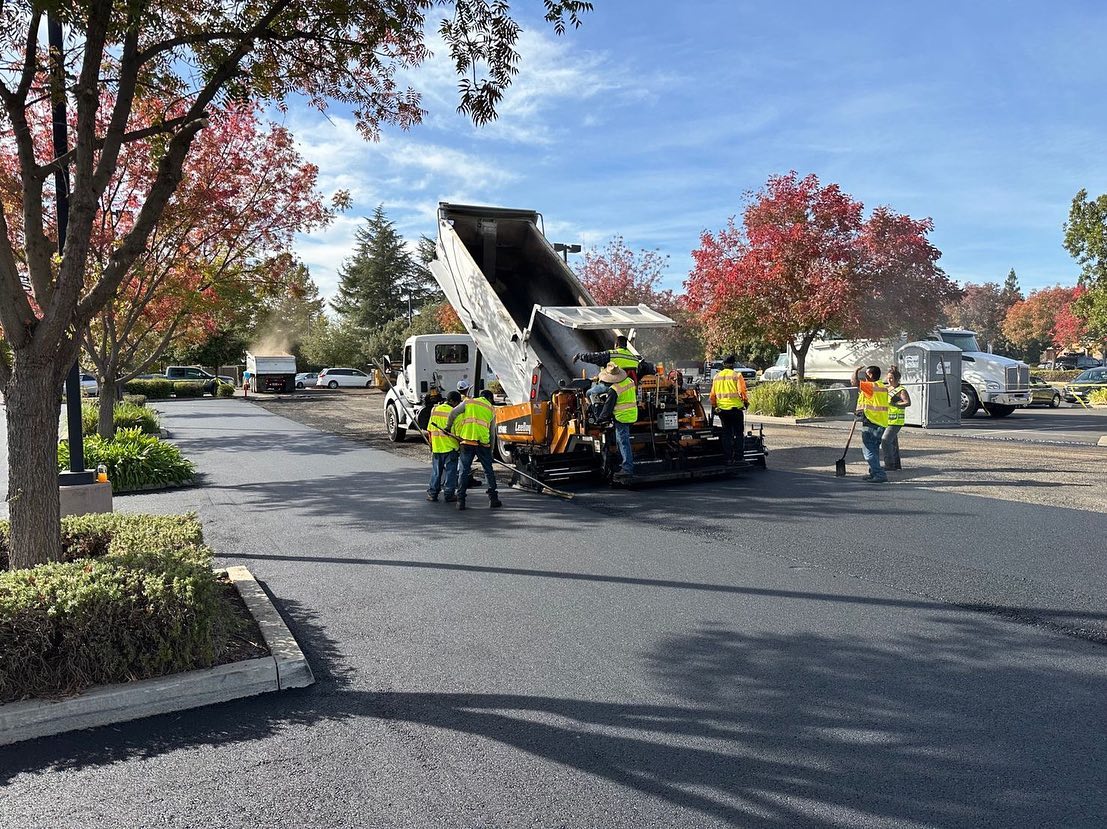
Parking Lot Repair: 7 Signs Your Property Needs Asphalt or Concrete Work
If you manage a commercial property, HOA, retail center, industrial facility, apartment community, or municipal property, your parking lot is one of the most heavily used areas of your site.
Cracks, potholes, uneven concrete, drainage problems, faded striping, and damaged accessible routes can develop gradually. Knowing what to look for can help property managers identify problems early, plan maintenance budgets, and determine when professional asphalt or concrete repairs may be needed.
At Action Asphalt & Concrete, we provide asphalt and concrete services throughout California and Nevada, helping property owners and facility managers evaluate pavement conditions and develop solutions based on the needs of each property.
1. Cracks Are Spreading Across the Parking Lot
A few isolated cracks don’t necessarily mean an entire parking lot needs replacement. However, cracking patterns can provide important information about pavement condition.
Cracks that continue to expand, interconnected cracking, or repeated cracking in previously repaired areas may indicate that more than routine maintenance is needed.
Pavement maintenance should be based on the actual condition of the pavement rather than applying the same treatment on a fixed schedule.
2. Potholes Keep Returning
Potholes aren’t only an appearance problem.
Repeated potholes in the same area can indicate deterioration below the pavement surface. Instead of repeatedly patching the same location, the underlying pavement condition may need to be evaluated to determine the appropriate repair.
This is especially important in high-traffic areas such as entrances, drive aisles, loading zones, delivery routes, and areas regularly used by heavy vehicles.
3. Water Is Pooling in Your Parking Lot
Standing water after rain is an important condition for property managers to monitor.
Low areas, damaged pavement, clogged drainage systems, or grading issues can contribute to water collecting on parking lots and pedestrian areas.
Current property maintenance guidance specifically recommends inspecting parking lots for drainage problems and areas where water collects.
For properties throughout California and Nevada, identifying drainage concerns before wetter weather arrives can also help property managers determine which areas should be incorporated into upcoming maintenance or capital improvement plans.
4. Concrete Walkways Have Cracks or Uneven Areas
Your pavement inspection shouldn’t stop at the parking lot.
Sidewalks, curbs, gutters, pedestrian walkways, ramps, and other concrete areas should also be reviewed for deterioration and uneven surfaces.
Trip hazards and damaged pedestrian areas can create safety and accessibility concerns and should be evaluated as part of an overall property maintenance plan.
5. Parking Lot Striping Is Difficult to See
Parking lot striping helps organize vehicle and pedestrian movement throughout a property.
Property managers should look for faded parking stalls, directional arrows, crosswalks, fire-lane markings, loading zones, and other pavement markings.
If markings are becoming difficult to see, restriping can be incorporated into a broader parking lot maintenance project.
6. ADA Parking and Accessible Routes Need Attention
Accessible parking isn’t simply about painting a blue parking space.
California accessibility guidance addresses accessible parking spaces, access aisles, routes, curb ramps, signage, slopes, and other elements. The California Commission on Disability Access also notes that accessible parking and accessible routes account for a significant share of formal accessibility complaints.
Property owners planning parking lot or concrete improvements should evaluate accessibility conditions as part of the overall project and determine which requirements apply to the specific scope of work.
7. You’re Planning Next Year’s Property Budget
You don’t have to wait until pavement fails to start planning.
September and fall property inspections can help facility managers and property owners document current conditions and establish priorities for upcoming maintenance and capital improvement budgets.
A pavement plan can identify areas requiring immediate attention, preventive maintenance, future rehabilitation, or continued monitoring. Current pavement-management guidance also recommends evaluating pavement conditions before major budgeting decisions.
This allows property owners to prioritize asphalt, concrete, ADA, drainage, striping, and other improvements based on urgency and available budgets.
Repair, Maintain, or Replace? It Depends on the Condition
Not every damaged parking lot needs to be completely replaced.
Depending on existing conditions, a commercial property may need crack sealing, sealcoating, localized asphalt repair, concrete repair, resurfacing, striping, drainage improvements, or more extensive pavement rehabilitation.
The appropriate solution depends on factors including pavement condition, traffic, drainage, property use, existing deterioration, and the long-term goals for the site.
That’s why evaluating the property before selecting a treatment is important.
Plan Your Commercial Asphalt & Concrete Project
Action Asphalt & Concrete provides asphalt and concrete solutions throughout California and Nevada.
Our services include asphalt paving and repair, concrete construction and repair, crack sealing and sealcoating, ADA compliance improvements, grading and excavation, parking lot striping, parking lot signage, outdoor game court construction, and trip hazard repair.
Whether you’re addressing an immediate pavement concern or developing next year’s capital improvement budget, planning early gives your team time to evaluate priorities, coordinate project phases, and develop a solution around your property’s operational needs.
Ready to evaluate your parking lot? Contact Action Asphalt & Concrete to discuss your commercial asphalt or concrete project.
neven transitions, poor drainage, surface movement, or improper grading can lead to:
- Premature cracking
- Pooling water
- Surface deterioration
- ADA compliance concerns
- Increased liability risks
- Faster wear in high-traffic areas
This becomes especially important in specialty-use spaces such as:
- Outdoor game courts
- Commercial walkways
- HOA common areas
- Retail parking lots
- Industrial loading zones
- Municipal pathways
- ADA ramps and transitions
These areas require careful planning, appropriate slope and transition details, durable materials, and experienced installation methods designed to withstand continuous use and changing conditions.
When Should Commercial Asphalt and Concrete Work Be Scheduled?
Commercial asphalt and concrete work can be planned throughout the year. The right timing depends on surface condition, project scope, weather requirements, site access, traffic levels, budget cycles, and operational needs—not on one specific season.
Proactive inspections and maintenance planning help property managers address visible wear before it becomes a larger repair. Scheduling work according to the needs of the property can help:
- Extend pavement and concrete service life
- Improve site safety and accessibility
- Reduce the likelihood of emergency repairs
- Control long-term maintenance costs
- Minimize disruption to tenants, customers, residents, and staff
- Coordinate work with budgets and capital improvement plans
Properties with multiple work areas may also benefit from phased construction. This provides flexibility to complete needed improvements while keeping essential areas open and accessible.
Planning Multi-Area Projects Without Overlapping Downtime
Large commercial, municipal, school, and HOA properties often require improvements across several surfaces. Coordinating asphalt repairs, concrete work, parking lot striping, signage, drainage, and ADA upgrades in phases helps keep properties operational while work progresses efficiently.
A strategic phased approach can help:
- Maintain tenant, resident, customer, and emergency access
- Reduce traffic congestion
- Improve project-site safety
- Limit business interruption
- Coordinate scheduling between trades
At Action Asphalt & Concrete, our team works closely with property managers, facility teams, HOAs, municipalities, schools, and general contractors to create organized project schedules that prioritize communication, safety, accessibility, and long-term value.
Specialty Areas Require Long-Term Planning
Specialty surfaces such as outdoor game courts, pedestrian walkways, ADA-accessible routes, and high-visibility commercial spaces require more than a standard paving solution. Site preparation, drainage, grading, surface consistency, traffic demands, and material selection all play a major role in long-term performance and appearance.
Whether a property needs asphalt paving, concrete repair, ADA improvements, parking lot striping, sealcoating and crack sealing, signage, grading and excavation, or specialty surface construction, proactive planning helps protect the investment and reduce unexpected surface failures.
Work With Trusted Commercial Asphalt & Concrete Experts
Since 1999, Action Asphalt & Concrete has provided commercial asphalt and concrete services throughout California and Nevada with a people-focused, value-driven approach. From parking lot rehabilitation and concrete improvements to ADA compliance and specialty paving projects, our team delivers durable solutions designed for high-use environments.
Contact Action Asphalt & Concrete to schedule a site evaluation or discuss a year-round maintenance, repair, or improvement plan for your commercial, HOA, school, industrial, or municipal property.
Comments are closed