


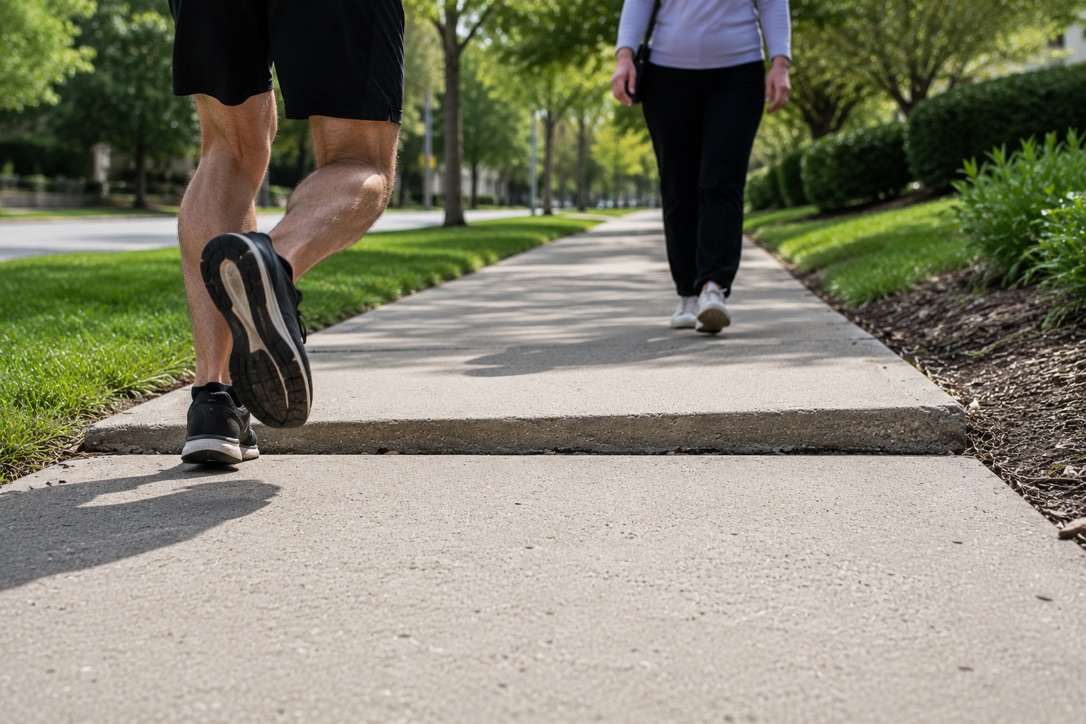
The Hidden Risks of Uneven Sidewalks and Walkways
Every day, residents, customers, students, employees, cyclists, and e-bike riders use sidewalks without thinking twice about what’s beneath their feet. But a raised sidewalk panel, tree-root uplift, or uneven walkway can quickly turn an ordinary walk into a painful fall.
For HOAs, commercial properties, schools, and municipalities, these hazards can impact safety, accessibility, property appearance, and maintenance budgets. The good news is that most trip hazards start small and can often be addressed before they become a larger problem.
Understanding what causes sidewalk hazards and how to identify them early is the first step toward creating safer, more accessible walkways for everyone.
What Is a Trip Hazard?
A trip hazard occurs when a walking surface becomes uneven, cracked, lifted, or otherwise unsafe for pedestrian traffic.
Common examples include:
- Uneven concrete panels
- Sidewalks lifted by tree roots
- Settlement and sinking concrete
- Cracked walkways
- Damaged curb ramps
- Surface deterioration
- Uneven transitions between sidewalk sections
Even small elevation differences can create challenges for pedestrians and mobility devices.
How Do Sidewalks Become Uneven?
Many property owners are surprised by how quickly sidewalks can deteriorate.
- Tree Root Growth: As trees mature, roots can expand beneath concrete surfaces and push sidewalk panels upward, creating uneven walking conditions.
- Soil Settlement: Over time, soil beneath sidewalks can shift or settle, causing concrete panels to sink and become uneven.
- Water and Drainage Issues: Poor drainage can erode supporting soils beneath sidewalks, accelerating movement and deterioration.
- Aging Concrete: Concrete naturally expands and contracts through seasonal temperature changes. Years of movement can eventually lead to cracking and displacement.
- Daily Wear and Traffic: Constant foot traffic, maintenance equipment, bicycles, and environmental exposure all contribute to long-term sidewalk wear.
Why Sidewalk Safety Matters
Uneven sidewalks can increase the risk of:
- Trips and falls
- Sprained ankles
- Knee injuries
- Wrist injuries
- Head injuries
- Reduced accessibility
For seniors, young children, and individuals with mobility limitations, these hazards can present even greater challenges.
Why HOAs, Commercial Properties, and Schools Should Pay Attention
Property managers and facility operators are responsible for maintaining environments that are safe, accessible, and welcoming.
Regular sidewalk inspections can help identify issues before they become larger problems.
Common properties that benefit from proactive trip hazard repair include:
- HOA communities
- Apartment complexes
- Shopping centers
- Office parks
- Schools and universities
- Healthcare facilities
- Municipal properties
- Industrial facilities
Addressing hazards early often helps reduce future repair costs while improving overall property appearance and usability.
The Growing Impact on Cyclists and E-Bike Riders
As more communities embrace bicycles and electric bikes, walkway and pathway conditions are becoming increasingly important.
 As more communities embrace bicycles and electric bikes, walkway and pathway conditions are becoming increasingly important.
Raised concrete panels, cracks, and uneven transitions can cause cyclists and e-bike riders to lose control unexpectedly.
Because e-bikes often travel at higher speeds than traditional bicycles, maintaining smooth and predictable surfaces is an important part of overall pedestrian and rider safety.[/caption]
Raised concrete panels, cracks, and uneven transitions can cause cyclists and e-bike riders to lose control unexpectedly.
Because e-bikes often travel at higher speeds than traditional bicycles, maintaining smooth and predictable surfaces is an important part of overall pedestrian and rider safety.
Accessibility Matters
Sidewalks play an important role in creating accessible pathways for all users.
Uneven surfaces can create challenges for:
- Wheelchair users
- Individuals using walkers
- Parents pushing strollers
- Delivery personnel
- People with mobility limitations
Maintaining smooth walkways helps support accessibility goals while creating a safer environment for everyone.
The Cost of Waiting
Small sidewalk issues rarely remain small.
Over time:
- Cracks widen
- Settlement increases
- Water intrusion worsens
- Repairs become more expensive
- Safety concerns grow
Routine sidewalk inspections every 6 to 12 months, along with timely repairs, can help extend the life of concrete surfaces, improve pedestrian safety, and minimize disruptions to daily property operations. According to ADA accessibility guidelines, vertical changes in level of 1/4 inch or greater should be evaluated and addressed to help maintain safe and accessible walkways.
Benefits of Professional Trip Hazard Repair
Professional trip hazard repair can help:
- Improve pedestrian safety
- Enhance accessibility
- Improve property appearance
- Extend pavement life
- Reduce long-term maintenance costs
- Create smoother walking surfaces
- Support property maintenance programs
In many cases, trip hazards can be corrected without the expense and disruption of full sidewalk replacement.
Protecting Your Property Starts from the Ground Up
Safe sidewalks are an important part of every well-maintained property.
Whether you manage an HOA, commercial property, school campus, healthcare facility, or municipal site, maintaining walkways helps create safer and more accessible environments for everyone who uses them.
Proactive trip hazard repair not only improves safety and appearance—it helps protect the long-term value and functionality of your property.
Frequently Asked Questions
What causes sidewalks to become uneven? Common causes include tree root growth, soil settlement, water intrusion, aging concrete, and everyday wear and tear.
What is considered a sidewalk trip hazard? Trip hazards may include lifted sidewalk panels, uneven concrete surfaces, cracks, settlement, and abrupt changes in elevation.
Are uneven sidewalks dangerous for e-bikes? Yes. Raised panels, cracks, and uneven surfaces can increase the risk of losing control, particularly at higher speeds.
How often should sidewalks be inspected? Properties should be inspected regularly, especially in high-traffic areas and after significant weather events or visible pavement movement.
Can trip hazards be repaired without replacing the entire sidewalk? In many cases, yes. Professional repair methods can often restore smoother walking surfaces without requiring full replacement.
Why is trip hazard repair important for HOAs? Trip hazard repair helps improve resident safety, maintain accessibility, enhance curb appeal, and support long-term property maintenance goals.
Why is trip hazard repair important for commercial properties?
Safe walkways create a better experience for customers, employees, tenants, and visitors while helping protect property assets and maintain accessibility.
Work With Trusted Asphalt & Concrete Experts
Since 1999, Action Asphalt & Concrete has provided commercial asphalt and concrete services throughout California and Nevada with a people-focused, value-driven approach. From parking lot rehabilitation to ADA compliance and specialty paving projects, our team delivers durable solutions built for high-use environments.
Comments are closed